If you are over 50 and thinking about your first 50-mile ride, the good news is simple: it is a very realistic goal. The catch is that it usually goes better when you treat it like a project, not a guess. A steady build, enough recovery, and a sensible fueling plan matter more than heroic effort.
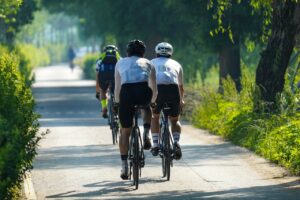
For many riders, 50 miles is a meaningful milestone. It is long enough to test your endurance, pacing, comfort, and confidence, but not so long that it belongs only to experienced racers. With the right preparation, it can be a rewarding step that opens the door to longer weekend rides, supported events, and more freedom on the bike.
What a realistic 50-mile goal looks like after 50
The first question is not whether you can ride 50 miles. It is whether you are ready to train for it in a way that respects your current fitness and recovery needs. For riders over 50, that usually means being honest about your starting point rather than copying a younger rider’s plan or trying to force progress.
A useful baseline is already being able to ride regularly, around three to four times a week, with a weekly total of about four to five hours. A recent comfortable 30-mile ride is a strong sign that a 50-mile goal is within reach. If 30 miles still feels like a major struggle, the smarter move is to build there first.
That does not make the goal smaller. It makes the plan more effective. The riders who finish their first long ride feeling good are usually the ones who respected the early stages.
How long should you give yourself?
For most cyclists over 50, seven to twelve weeks is a more realistic training window than a last-minute push. A 30-day plan can work for riders who already have a strong base and are regularly doing longer rides, but it is aggressive for someone returning to cycling or starting from a lower fitness level.
Why does the longer timeline help? Because endurance is only part of the picture. Your legs, joints, lower back, soft tissue, and overall recovery capacity all need time to adapt. That adaptation is what makes a 50-mile ride feel challenging but manageable instead of draining and discouraging.
A longer build also gives you time to test the things that matter on the day itself, such as saddle comfort, clothing, food, hydration, and pacing.
A simple weekly structure that works
You do not need a complicated training plan to prepare for a first 50-mile ride. What you need is consistency and a balance between stress and recovery.
A practical week often includes one longer ride, one slightly harder ride with hills or intervals, and one or two easier shorter rides. The long ride should grow gradually, and the harder ride should feel controlled rather than all-out. The easier rides help you stay in the routine without burying yourself in fatigue.
This is where older riders often benefit from being more conservative, not less ambitious. The goal is to arrive at the start line fresh enough to enjoy the ride, not simply to survive training.
Rest days matter just as much as riding days. For many riders over 50, two to three rest days per week is a sensible starting point, especially early in the build. Recovery is not lost time. It is when the body actually adapts.
How to build mileage without overdoing it
The safest approach is gradual progression. A common rule of thumb is to increase total training load by about 10 to 20 percent per week, rather than making big jumps in distance. That is especially important if you are returning after a break or if you know your knees, hips, or back can be sensitive when volume climbs too quickly.
Your long ride does not need to jump straight from 20 to 40 miles. It is better to add a modest amount each week and allow your body to settle into the change. Some weeks should be easier on purpose. That is not a setback. It is part of the process.
If you notice that fatigue is carrying over from one ride to the next, or that soreness is getting worse instead of better, that is a sign to back off a little. The best training plan is the one you can repeat week after week.
What distance should your longest training ride reach?
For a first 50-mile ride, it is helpful to build your longest training ride into the 40 to 45 mile range before the event. That gives you enough exposure to longer-duration effort without needing to duplicate the full ride repeatedly.
You do not need to hit 50 miles in training to be ready for 50 miles on the day. In fact, for many riders over 50, repeatedly forcing full-distance training rides can add unnecessary fatigue. A strong 40-plus-mile ride done comfortably is often a better sign that your pacing, fueling, and endurance are coming together.
Think in terms of confidence as well as fitness. If you can complete a 40-mile ride feeling controlled, with enough energy left to finish smoothly, you are much closer than the raw number might suggest.
Train the way you plan to ride
One of the smartest things you can do is make your training resemble the ride you are preparing for. If your target event or route is hilly, train on hills. If the route is mixed terrain, include mixed terrain. If you expect stop-and-go riding, practice at least some rides that include those interruptions.
Specificity matters because it reduces surprises. A flat-only training routine can leave you unprepared for climbing. A short, casual spin pattern may not prepare you for the sustained effort of a five-hour day in the saddle.
That does not mean every ride has to be hard. It means your long rides should teach you something useful about the ride you actually want to complete.
Don’t ignore pacing
Pacing is one of the biggest reasons first long rides go poorly. Many cyclists feel strong early on, ride too hard in the first hour, and then pay for it later with heavy legs, low energy, and a difficult final stretch.
A better approach is to start a little easier than you think you should. On a 50-mile ride, especially your first one, the early miles should feel controlled. If you finish thinking you had a little more left in the tank, that is usually a sign you paced it well.
If you have already ridden 30 miles, use that ride as a reference point. Estimate your likely 50-mile time from that experience, then add a buffer of about 30 minutes. That extra margin helps you plan food, water, daylight, and mental effort more realistically.
Fueling and hydration are part of training
A long ride is not just a fitness test. It is also an eating and drinking exercise. If you wait until you feel empty, you are already behind.
For rides over 30 miles, it helps to eat regularly and drink throughout the ride. Many riders do well with a simple rhythm of eating every 45 to 60 minutes, then adjusting based on how the ride feels and how long you expect to be out. Sports drinks, bananas, energy gels, bars, or other easy-to-digest foods can all work if your stomach tolerates them.
The key is to practice your fueling during training, not for the first time on event day. Some foods feel fine in theory and terrible after two hours of riding. Testing your options ahead of time is one of the easiest ways to avoid a bad experience.
Hydration matters just as much. Carry enough water for the conditions, and remember that warm weather, climbing, and longer effort all increase your needs.
What to do about saddle soreness
Saddle soreness is one of the most common problems in the early stages of long-distance training. It is uncomfortable, and it can make riders doubt whether they belong on the bike at all. In many cases, though, it is simply part of the adaptation process.
That said, soreness should improve as your body gets used to longer rides. Padded shorts, a proper chamois, and chamois cream can help. So can building time in the saddle gradually instead of forcing long rides too soon.
If pain is persistent, severe, or getting worse, do not just push through it and hope it disappears. That kind of discomfort can point to a bike fit issue, a saddle that does not suit you, or shorts that are not working well for your body. At that point, a professional bike fit may be worth considering.
Why strength and mobility work help older riders
Cycling is gentle in some ways, but it does not use every part of the body equally. For riders over 50, that matters. A little strength training, core work, yoga, or swimming can support the muscles that keep you stable on the bike and may help reduce the kind of wear-and-tear that shows up as lower back discomfort or general instability on longer rides.
You do not need a full gym program to benefit. Even one or two sessions a week can help if they are consistent and sensible. Focus on quality rather than exhaustion.
This kind of support work is especially useful if you are building back from a layoff or if you know that stiffness tends to show up after longer rides. The goal is to make cycling easier to sustain, not to add another source of fatigue.
How to recover well between rides
Recovery is where many older cyclists gain the most by being patient. The training stress is only useful if your body has time to absorb it. That means sleep, food, hydration, and rest days all deserve attention.
After harder or longer rides, give yourself enough time to feel normal again before the next big effort. Early in training, that may mean three or four days between long rides. As your base improves, you may tolerate more frequent riding, but the guiding principle stays the same: if you are still carrying fatigue, recover first.
This is also where life stress matters. Work, family duties, poor sleep, and travel all affect recovery. A good plan takes those realities into account instead of pretending training exists in a vacuum.
Common mistakes that make a 50-mile goal harder
The most common mistake is starting without enough base fitness. If you have not ridden 30 miles comfortably and you are not riding regularly, a 50-mile attempt can feel unnecessarily brutal.
Another mistake is ramping up too quickly. Big mileage jumps are tempting because progress feels exciting, but they often create soreness, fatigue, or discouragement. Skipping rest days can do the same thing, just more quietly.
Many riders also underfuel their long rides. That usually shows up late in the ride as low energy, poor concentration, and a sense that the whole effort has suddenly become much harder. Similarly, riders who do not practice their food strategy may discover that the snack they brought does not sit well after two hours.
It is also easy to train only on flat roads and then be surprised by hills. Or to focus only on distance and ignore comfort, posture, and core strength. These gaps show up fast on a long ride.
A realistic way to know you are ready
You are probably ready to attempt your first 50-mile ride when you can ride regularly, recover well, and complete a comfortable 30-mile ride without feeling destroyed afterward. You should also have a sense of how long your rides take, what food works for you, and how your body responds to back-to-back training days.
Readiness is not perfection. It is a pattern of steady rides, manageable fatigue, and growing confidence. If you can do that, the distance becomes much less intimidating.
If you are still unsure, that is fine. Confidence usually comes from the training itself. A few good weeks on the bike can answer questions that worry alone cannot.
The bottom line for your first 50-mile ride
Training for your first 50-mile ride after 50 is less about proving something and more about building a process you can trust. Start from your current fitness, add distance gradually, recover properly, and practice the basics of pacing, fueling, and comfort before the big day.
If you want the simplest next step, look honestly at your current week: how often you ride, how far your comfortable long ride really is, and whether you can recover well afterward. From there, choose a realistic seven- to twelve-week build and keep it steady. That approach gives you the best chance not only to finish 50 miles, but to enjoy doing it.