If you are over 50 and riding regularly, you may notice a strange mix of things: some efforts still feel familiar, while others suddenly take more out of you than they used to. That does not mean you are “done” as a cyclist. It means cycling performance changes with age in predictable ways, and many of the most important qualities are still trainable.
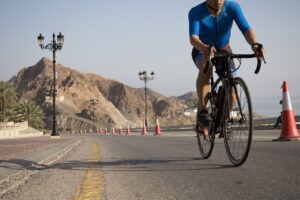
The key is learning the difference between what truly declines, what only feels different, and what can be protected with the right training. That shift in perspective matters because it helps you stay confident, ride consistently, and avoid giving up intensity too early.
What Actually Changes, and What Stays Trainable
The biggest age-related change for cyclists is a gradual drop in maximum aerobic capacity, often discussed as VO2 max. In practical terms, that means your highest sustainable oxygen use, and therefore your peak aerobic ceiling, tends to fall with age. A common estimate is a decline of about 1 to 2 percent per year after 50, although trained cyclists usually lose capacity more slowly than sedentary people. That matters, but it does not mean your riding has to fall apart.
What often surprises older riders is that a lower VO2 max does not automatically translate into a major drop in real-world cycling ability. Endurance riding depends heavily on the power you can hold below your ceiling, not just the ceiling itself. That is why many cyclists over 50 can still get stronger in the ways that matter for group rides, climbs, fondos, and long steady efforts.
One of the most important examples is threshold power, the effort you can hold for a long time without fading badly. Training can improve this even as VO2 max slowly declines. For many masters cyclists, the practical goal is not to chase the absolute highest peak numbers from earlier in life, but to raise or preserve the power they can sustain for 20 minutes, an hour, or longer.
Sprint power is similar. It can decline with age, especially if you stop training it. Fast-twitch muscle fibers and the ability to recruit them quickly become less reliable without specific work. But that is not the same as “sprinting is impossible after 50.” It usually means sprinting becomes more dependent on practice, leg speed, and strength maintenance. In other words, it is a trainable quality, not a lost one.
Muscle mass also tends to decline with age, a process often called sarcopenia. This is one reason some older cyclists feel less stable on the bike, especially during slow-speed maneuvers, unclipping, standing starts, or riding in traffic. Loss of strength around the hips and glutes can affect balance and control, which makes strength work more than a gym-side bonus. For many riders over 50, it is part of staying safe and confident.
Why Performance Feels Different: Recovery and Perception
A lot of cyclists over 50 describe the same frustration: “My numbers are okay, but I feel more tired than I used to.” That experience is real, but it can be misleading if you take it as proof that your body is no longer adapting.
Recovery in trained older cyclists is more nuanced than many people assume. Objective measures in some studies show that trained older riders can recover similarly to younger riders, even when they feel more sore or fatigued. The subjective sense of being slower to bounce back may increase with age, but it does not always match actual recovery capacity. That distinction matters, because it can prevent you from over-resting out of fear.
This is one of the main reasons cycling recovery changes with age can be confusing. You may need more attention to sleep, fueling, hydration, and session spacing, but that does not mean every hard ride must be followed by a long shutdown. If you only listen to soreness, you may reduce training too much and lose the very adaptations you are trying to preserve.
For older cyclists, the best feedback is a blend of objective and subjective information. Power data, heart rate trends, and repeatable session performance can show whether you are actually losing fitness or just feeling the normal strain of training. Meanwhile, your own sense of heaviness, motivation, or lingering fatigue still matters, because it can flag when life stress, poor sleep, or under-fueling is interfering.
This is also why rides can feel harder as you age even when power does not collapse. The body may be working harder to produce the same output, or you may be carrying more background fatigue from work, family responsibilities, poor sleep, or reduced daily movement. None of those are trivial. But they are not the same as inevitable performance failure.
Training Smart: What Works for 50+ Cyclists
If you want to maintain cycling speed over 50, the most useful approach is usually not to chase endless maximal efforts. It is to train the qualities that age tends to erode while protecting the ones that matter most for sustainable riding.
Threshold work should stay near the center of the plan for many masters riders. That is the zone where you improve the power you can hold for longer efforts, which is often more useful than one-off peak numbers. Long climbs, fast group rides, and time trials all reward this ability.
Sprint or leg-speed work should also stay in the mix, even if only briefly once a week. Short bursts, fast cadence accelerations, or low-cadence strength efforts help preserve the neuromuscular skills that support explosive power. If you stop practicing them, they fade faster than they need to.
At the same time, recovery older cyclists often need more structure around hard days, easy days, and sleep. That does not mean training less by default. It means being more deliberate. Many older riders do better with consistency than with big, sporadic heroic blocks. A sustainable rhythm usually beats occasional overreaching.
Nutrition matters more too. Protein intake becomes especially important as the body gets older and muscle maintenance becomes harder. If you are training regularly but not eating enough, it is easy to mistake under-fueling for “aging.” The same goes for hydration and carbohydrate intake around harder sessions. Better recovery is often built from boring basics, not fancy tricks.
If you are wondering what declines in cycling performance after 50 most reliably, the answer is usually not everything at once. Maximum aerobic power, sprint sharpness, and muscle mass are the obvious ones. But your ability to improve sustainable power, stay efficient, and keep riding well is still very much alive.
Strength, Balance, and Safety Essentials
For aging cyclists performance, strength training is not about building a bodybuilder’s physique. It is about keeping the muscles that stabilize you on and off the bike working well enough to support balance, power transfer, and daily mobility.
Hip and glute strength deserve special attention because they influence posture, pedal stability, and control during uneven or awkward movements. Weakness there can make a rider feel less secure when clipped out, stopping on a cambered road, or maneuvering at low speed. Balance issues also matter off the bike, where a simple stumble becomes more consequential with age.
That is why many cyclists over 50 benefit from two short strength sessions a week focused on the lower body, hips, and core. The goal is not to exhaust yourself. It is to maintain the muscle and coordination that keep riding comfortable and safe. If your current routine has no resistance work at all, even a simple, consistent plan can make a meaningful difference over time.
Safety also becomes more important as vision, reaction time, and confidence in traffic change subtly with age. Some older riders respond by choosing better routes, riding at calmer times, or using helpful gear such as radar or a horn. Those changes are not signs of weakness. They are smart ways to preserve enjoyment and reduce risk so you can keep riding longer.
If you notice recurring instability, frequent near-falls, or a growing fear of slow-speed handling, it is worth taking that seriously. Sometimes the issue is equipment, fit, or practice. Sometimes it reflects a balance or health problem that deserves a professional check-in.
Real-World Riding After 50
One encouraging pattern from surveys of older cyclists is that many people actually ride more after 50, especially after retirement or once they gain more control over their schedule. Some also adapt in practical ways by choosing safer roads, using more path riding, or adding an e-bike for certain rides. The message is not that aging cyclists performance never changes. It is that many riders remain active, adaptable, and enthusiastic well past the age when they expected to slow down.
That real-world picture matters because fear of decline can become self-fulfilling. If you assume every hard effort will fail, you stop doing the work that preserves speed. If you avoid sprinting, strength training, or harder group rides altogether, the body gets less reason to keep those systems sharp. The result is often more decline than age alone would have caused.
A better mindset is to accept that some things are changing while refusing to let them define your whole ride. You may not recover exactly as you did at 35. You may need more sleep, smarter fueling, and a little more planning. But you can still improve, race yourself, chase local climbs, and enjoy spirited riding.
Answers to the Questions Riders Ask Most
Does VO2 max drop make cycling impossible after 50? No. VO2 max age cycling trends downward, but that does not make cycling impossible or even uncompetitive for recreational and enthusiast riders. Many cyclists keep making meaningful progress by focusing on sustainable power, pacing, and consistency.
Can older cyclists still sprint effectively? Yes, often they can, especially if they keep practicing it. Sprint power decrease with age cycling is real for many riders, but it is strongly influenced by how much explosive work you still do. If you never ask for that effort, it fades faster.
Why do rides feel harder as I age but power doesn’t drop? Because fatigue, soreness, sleep quality, stress, and perception of effort can all change before your actual output changes much. You may be feeling the cost of training more clearly even when your fitness is still solid.
What training prevents performance decline in cycling over 50? The most useful mix for many riders is threshold work, short sprint or leg-speed efforts, and regular strength training, backed by enough recovery, protein, and sleep to support adaptation.
The Bottom Line for Cyclists Over 50
Cycling performance changes with age, but not in the simple, discouraging way many riders fear. Maximum aerobic capacity and explosive power tend to decline, and muscle mass does become harder to maintain. At the same time, trained cyclists often preserve or improve the kinds of power that matter most for real riding, especially when they keep doing the right work.
If you are over 50, the goal is not to resist aging as if nothing has changed. It is to train with better priorities. Keep threshold work in your plan, do not abandon sprint practice, add strength work for hips and balance, and pay closer attention to sleep, fueling, and route choices. That combination will not freeze time, but it can keep you riding strongly, safely, and with much more confidence than you might expect.