There is no single handlebar height that every cyclist should use after 50. For a comfort-oriented position, starting with the bars level with the saddle or a little higher is reasonable, but it is a starting point, not an age-based rule.
In bike-fit discussions, “handlebar height” usually means the bars’ position relative to the saddle, not their height above the ground. The right relationship depends on your bike, body proportions, flexibility, riding goals and how comfortably you can reach and control the bike. If you are adjusting because of discomfort, height is only one part of the fit to check.
Use saddle height as a starting reference, not a target
With the bike on level ground, compare the top of the saddle with the handlebar area where you normally place your hands. Bars level with the saddle, or modestly above it, can be a useful first position for recreational riding, especially if a low cockpit makes you feel stretched or forces you to hold a deep forward bend.
That comparison does not tell the whole story. A drop-bar road bike offers several hand positions, and the bars’ shape and brake-lever placement affect how you reach them. A flat-bar hybrid or mountain bike has a different cockpit and riding posture. Frame geometry, stem angle and length, bar shape, and your torso and arm proportions all influence the position you experience.
Nor does being over 50 automatically mean you need high bars. A flexible rider who is comfortable and in control with a lower position may have no reason to change it. A rider of any age with recurring neck or hand discomfort, limited tolerance for a forward bend, or a history of injury may have reason to explore a more upright position. The decision should follow the individual, not the birthday.
Judge the position by reach, comfort and control
When you are riding in your usual hand position, look for relaxed shoulders, a slight bend in your elbows and hands that feel stable rather than heavily loaded. You should be able to reach the brakes and make ordinary steering corrections without straining or bracing yourself against the bars.
Pay attention to what happens over time, too. A position that feels fine while you are standing over the bike or riding around the block may become uncomfortable on a longer outing. Note whether tension, pressure or numbness appears in your hands, wrists, shoulders, neck or lower back, and whether it changes with the terrain or with your hand position.
Raising the bars can reduce how far you need to lean forward, and for some riders that eases pressure on the hands or makes the position more comfortable. It is not a guaranteed fix. If the bars remain too far away, you may still feel stretched out. If they come too close or too high for your proportions, the position may feel cramped. In either case, a change in height alone may not address the actual problem.
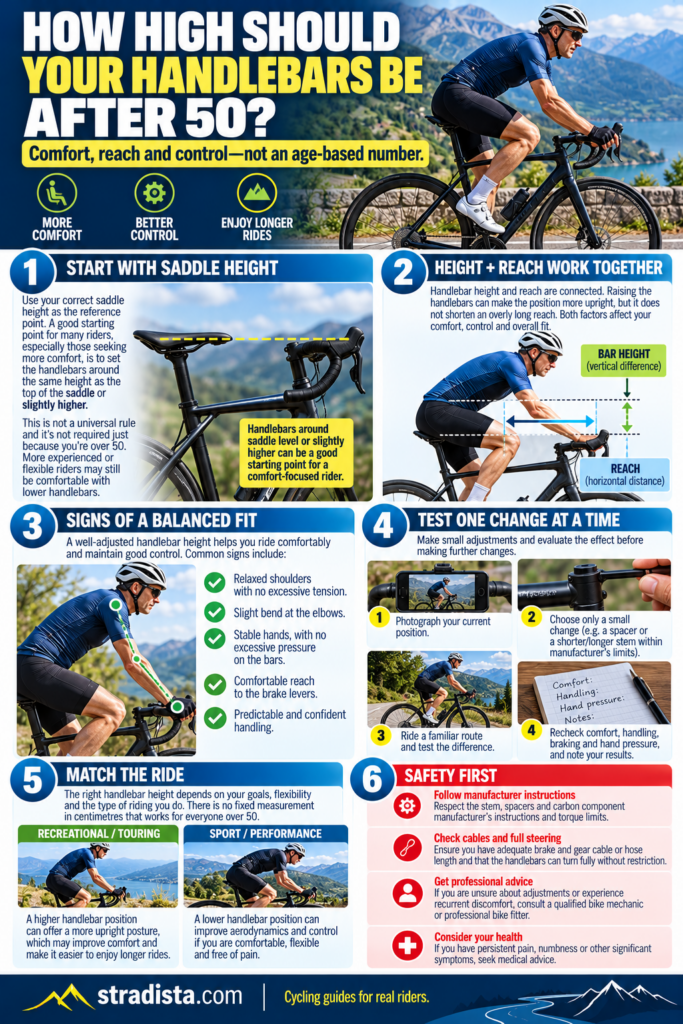
Height and reach work as a pair
Two bikes can have bars at the same height relative to their saddles and still feel very different. The distance from the saddle to the bars, the frame’s geometry and the cockpit components affect how far you reach. A rider can have high bars and still feel stretched out, or low bars and feel cramped.
That interaction matters when you are troubleshooting. If raising the bars leaves you reaching forward, consider whether the reach, saddle position or frame size also needs attention. Repeatedly raising the front end to compensate for a bike that is too long may not produce a balanced fit, and cockpit adjustments cannot correct every frame mismatch.
Research also cautions against treating height as an isolated answer. A 2022 pilot study examined handlebar height alongside frame length. It reported that comfort depended on the combination of those factors, while finding no muscle-activity differences at the low intensities tested. The study does not establish a universal position, particularly for longer or harder rides, but it reinforces the practical point: the relationship between the parts matters. A broader review of research on cycling position likewise describes effects that depend on the position and the outcomes being measured.
A lower position may suit a rider seeking a more aerodynamic posture, provided they can reach it comfortably and retain control. But lower is not automatically faster or better for every ride, just as higher is not automatically easier on the body. Comfort, breathing, effort and handling can vary with the bike, rider and riding conditions.
Make one small, reversible change at a time
Before adjusting anything, record or photograph the current setup. Then change one variable, ride in familiar conditions, and assess both comfort and control before deciding whether to make another change. If you alter the bars, stem and saddle position together, it becomes difficult to tell which change helped or created a new issue.
Depending on the bike, a small adjustment may be possible by changing the permitted spacer arrangement, using a compatible stem with more rise, or choosing a different handlebar. Some bikes have integrated cockpits, internal cable or hose routing, or carbon components that limit what can be changed and how. Do not assume that a part can be moved or swapped just because it appears to fit.
Check the component and bicycle manufacturers’ instructions before changing the stem, spacers or bars. Respect steerer-tube and component limits, clamping requirements, minimum insertion marks and specified torque values. A change must also leave enough cable or brake-hose length for steering, and preserve reliable braking and shifting. If the installation is unclear, ask a qualified mechanic rather than improvising.
On a drop-bar bike, check that you can reach the brake levers securely from the hand position you use most. On a flat-bar bike, assess whether the bar’s sweep and grip position let your wrists and shoulders sit comfortably. The aim is not simply to raise the contact point, but to create a position in which you can use the controls confidently.
Match the setup to the riding you actually do
For steady recreational rides, an upright position may be preferable if it helps you stay comfortable and relaxed for longer. A touring rider may also prioritize a stable, sustainable position and easy access to controls. A road rider who spends time in the drops may need enough flexibility and reach to use those positions without strain. None of these goals establishes a fixed saddle-to-bar measurement.
Handlebar height can also change how the bike feels. Moving the front end higher may alter weight distribution and steering feel, while a different stem or bar can change reach as well as height. After an adjustment, ride somewhere familiar and check that the bike still feels predictable in turns and that you can brake confidently. If the position improves comfort but undermines control or access to the levers, it needs further review.
Do not judge the result only by whether the bike feels more upright. Consider whether you can maintain the position through a normal ride, vary your hand positions where the bike allows, and steer and brake without discomfort or hesitation. A sustainable setup is a balance between comfort, reach and control, not a posture competition.
Know when to look beyond handlebar height
Recurring hand numbness, localized pain, persistent neck or shoulder tension, or difficulty controlling the bike are reasons to review the complete fit rather than keep raising the bars. Saddle position, frame reach, bar shape and brake-lever placement can all affect how you load and reach the cockpit. Workload, an injury or another health issue may also contribute, so discomfort is not proof that the bike is at fault.
A qualified bike fitter can assess the whole position when adjustments keep creating new trade-offs, symptoms are persistent or one-sided, or you are making a substantial change to your riding posture. This is particularly useful when the bike’s geometry or integrated components limit straightforward adjustments. A fit assessment can help identify equipment and positioning issues, but it is not a medical diagnosis.
Seek appropriate medical assessment for pain after a crash, progressive neurological symptoms, marked weakness, chest pain or dizziness, or symptoms that continue away from cycling. Those signs should not be treated as a simple cue to raise the handlebars.
If your current position is comfortable and gives you reliable control, age alone is no reason to change it. If it is not, begin with a modest, technically safe adjustment and assess reach, hand pressure and braking as carefully as height. If the same discomfort persists, investigate the complete fit rather than chasing a higher bar.