Starting road cycling after a long break can make the bicycle seem like the hardest decision. In practice, your first priorities are a bike you can control, a route that lets you practise without traffic pressure, and rides short enough to recover from comfortably. You do not need a racing bike, clipless pedals or a fixed mileage target to begin.
Age 50 or older is not, by itself, a reason to avoid cycling. Your current fitness, health, balance, vision, mobility, medication and previous injuries matter more when deciding how to start. Cycling can be a useful low-impact way to build aerobic activity, but riding outdoors still involves traffic, falls, weather and mechanical problems, and cycling alone does not cover every kind of exercise that supports health.
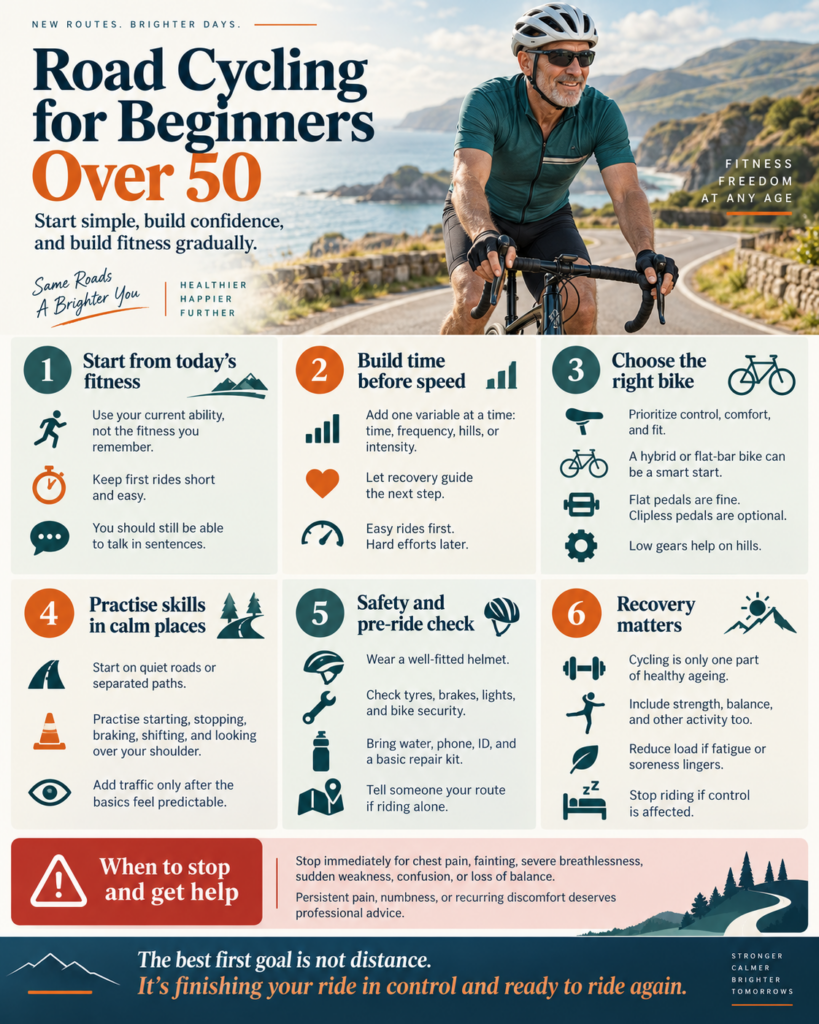
Start from your current capacity, not the fitness you remember
If you can manage ordinary daily activity without concerning symptoms, you may be able to begin with easy cycling. A rider who has stayed active through walking or indoor exercise may have a different starting point from someone returning after years of inactivity, even if both are the same age. Cycling also uses specific muscles and handling skills, so fitness from another activity does not always translate into a long or hilly first ride.
If you have a cardiovascular, metabolic, neurological or musculoskeletal condition, significant balance or vision concerns, or a history of surgery or serious injury, ask a clinician or qualified exercise professional how to begin. This is particularly relevant before attempting vigorous exercise. It does not mean every adult over 50 needs medical clearance before an easy ride.
For the first outings, choose an effort that feels light to moderate. You should be able to speak in sentences rather than concentrating on pushing hard. If you are new to cycling or returning after a lengthy break, keep the ride short enough that you remain alert and in control, then see how you feel later that day and the next. Increase time or riding frequency gradually; leave sustained hard efforts and demanding climbs until easy riding feels manageable.
Public-health guidance commonly uses 150 minutes of moderate aerobic activity per week as a broad benchmark for older adults. That is a longer-term population target, not a first-week prescription or a requirement that all the activity come from cycling. The appropriate starting amount depends on your recent activity and health, and a smaller amount can be a sensible beginning.
Build cycling time before adding speed or hills
There is no validated, cycling-specific first-month plan for every beginner over 50. A useful approach is to change one thing at a time and let recovery guide the next step. For example, begin with one or two short, easy rides on a quiet route. If you recover well and feel comfortable handling the bike, repeat similar rides the following week or add a little time to one outing. Later, you might add another easy ride or try a gently rolling route. You do not need to increase duration, frequency and difficulty together.
A walk-to-bike transition calls for particular patience: being able to walk for an hour does not mean your hands, saddle area and cycling muscles are ready for an hour on a bike. Likewise, someone returning to outdoor riding after indoor cycling may have aerobic fitness but still need time to adjust to steering, uneven surfaces, wind, junctions and traffic. Keep those first outdoor sessions deliberately simple.
If a ride leaves you unusually tired, sore enough to change how you move, or reluctant to ride again, repeat an easier week or reduce the next ride’s duration, intensity or climbing. Recovery varies with sleep, health, workload and riding history. A rest day between early rides can make it easier to judge how your body responds, but there is no universal schedule that suits everyone.
Once easy rides are comfortable, introduce hills gradually. Use low gears early rather than waiting until your legs are exhausted, and turn back or shorten the route if fatigue starts to affect braking, attention or balance. The aim is not to prove you can finish a particular distance. It is to finish with enough control and energy that another ride remains realistic.
Choose a bicycle for control, fit and the roads you will ride
The best beginner road bike is the one that fits your body and intended riding, not the lightest or most expensive model. A conventional drop-bar road bike can suit longer rides on paved roads, but the low or stretched position may not feel comfortable or easy to control for everyone. A flat-bar road bike or hybrid often offers a more upright position and familiar hand placement. An electric bicycle can make hills or longer trips more manageable, though you still need to practise handling and braking; assistance does not remove road hazards.
Try a bike before buying when possible. Check that you can mount and dismount confidently, reach the brake levers, steer without feeling stretched, and stop with control. A shop can help compare frame sizes and adjust saddle, handlebar and lever positions. There is no universal saddle height or reach measurement that guarantees comfort: body proportions, flexibility, mobility, riding style and injury history all matter.
Choose gearing with your local terrain in mind. If your routes include hills, the easiest gear should let you pedal steadily rather than grind slowly under heavy force. Reliable brakes that you can operate comfortably matter more than a particular brake type. Tyres should suit the surfaces you expect to ride and fit the bicycle’s permitted clearance; wider tyres are not automatically right for every bike or rider.
Flat pedals are a sensible way to learn starts, stops and basic handling. Clipless pedals, which attach cycling shoes to the pedals, are optional and add a release skill to practise. There is no need to make that adjustment before you are comfortable riding. A professional bike fit can be useful if persistent discomfort remains after basic adjustments, or if you have a complex injury history, marked asymmetry or difficulty controlling the bike. It is not a substitute for clinical assessment when symptoms suggest a health problem.
Practise skills before adding busy traffic
Start in a quiet, open area or on a suitable separated path where you can ride without competing demands. Practise mounting and dismounting, starting smoothly, braking firmly while keeping the bike straight, and shifting gears before a hill rather than in the middle of a hard effort. Then practise looking over a shoulder without drifting, signalling, cornering at a controlled speed and riding around a visible obstacle. Work up to an emergency stop in a safe space.
These skills are easier to learn without cars close by. Once they feel predictable, choose familiar routes with clear sight lines, manageable junctions and surfaces you can read. A short loop close to home is often a better first outing than a longer route that leaves you far from help. If you are unsure about traffic skills, a local cycling instructor, club beginner ride or calm, experienced companion can help. A group ride should match your ability and feel supportive, not pressure you to keep up.
Outdoor cycling differs from indoor riding because you must also respond to traffic, potholes, gravel, parked vehicles, weather, navigation and mechanical problems. Check the forecast and daylight, carry a charged phone and identification, and tell someone your route if riding alone in an unfamiliar area. If wind, rain, poor visibility or fatigue makes control harder, choose another route, shorten the ride or postpone it.
Use safety equipment and a simple pre-ride check
Wear a correctly sized helmet that sits securely and is fastened as intended. Check the helmet’s condition and choose one that meets the applicable safety certification requirements where you live. Bright or fluorescent clothing can help you stand out in daylight; reflective details and working front and rear lights are important when visibility is poor or after dark. These measures improve protection or conspicuity, but they cannot guarantee that other road users will see you or prevent every injury.
Before each ride, check that the tyres are in good condition and inflated within the range marked or recommended for them, the brakes work, and the wheels and handlebar are secure. Look over the chain and confirm your lights are charged and attached firmly. Take water, identification, a charged phone and a basic repair kit suited to your bike. If you carry a pump or repair supplies, learn how to use them before you need them at the roadside.
Road rules and equipment requirements differ between countries and may vary within them. Check current local rules for helmet use, lights, reflectors, road position and any required equipment rather than relying on advice written for another market.
Make cycling one part of a balanced activity routine
Cycling provides aerobic activity and is relatively low impact on the joints, which can make it an appealing option for many people. It does not automatically provide enough strength work, balance practice or weight-bearing activity. Older-adult activity guidance recommends including those components as well as aerobic exercise. Cycling may also provide less bone-loading stimulus than weight-bearing activities, so people with concerns about bone health should ask a clinician or qualified exercise professional about suitable options.
Strength exercises and balance practice can be adapted to your ability, symptoms and history. If balance is a concern, begin with exercises in a setting where you can hold a stable support or seek professional guidance rather than trying challenging drills beside a road. Walking or other suitable weight-bearing activity may complement riding, but the right combination depends on your health and mobility.
Studies of cycling in older populations suggest potential benefits for fitness and function, and some report improvements in balance-related outcomes. That evidence does not mean outdoor road cycling prevents falls or replaces balance training. Riding itself brings fall and collision risks, so build handling skills in controlled conditions and keep complementary activity in your routine.
Adjust for discomfort, and know when to stop
Some new pressure or general muscle fatigue can occur when you restart an activity, but sharp, worsening or recurring pain is not something to solve by simply riding harder. If discomfort appears during a ride, ease off or stop and assess whether continuing would affect your control. For a mild issue that settles, make the next ride shorter or easier and check whether the bike feels controllable. Persistent saddle, hand, neck, back, hip or knee symptoms may relate to workload, equipment, fit or other factors; one adjustment cannot be assumed to fix every cause. Numbness, symptoms that interfere with normal function, or pain that keeps returning deserves attention from a qualified clinician or bike-fit professional, depending on the problem. Seek assessment if symptoms worsen, persist despite reducing the load, or are linked to a previous injury or surgery. Stop riding if dizziness, visual disturbance, severe fatigue or loss of balance makes it difficult to control the bike.
For a first ride, choose a familiar, quiet route, use a bike you can stop and steer confidently, and ride easily for a duration that leaves your control intact. Make the next decision after you have seen how you recover. That is a more useful starting point than choosing a target distance or buying equipment designed for someone else’s riding.